




Tummy Time Explained: When to Start and Why It Matters for Baby Development
Becoming a new parent comes with countless questions, and one topic many families hear about early on is tummy time. While it may seem simple, tummy time plays an important role in your baby’s physical growth and development during the first year of life.
According to the American Academy of Pediatrics, supervised tummy time while babies are awake helps strengthen muscles needed for movement and development. Research also shows tummy time can help support motor skill development and reduce the risk of flat spots on a baby’s head.
What Is Tummy Time?
Tummy time is when babies spend supervised time lying on their stomachs while awake. This activity helps strengthen the muscles babies need for important developmental milestones like rolling over, sitting up, crawling, and eventually walking.
Since babies spend a large amount of time sleeping on their backs for safe sleep, tummy time provides an opportunity to develop strength in different parts of the body.

When Should You Start Tummy Time?
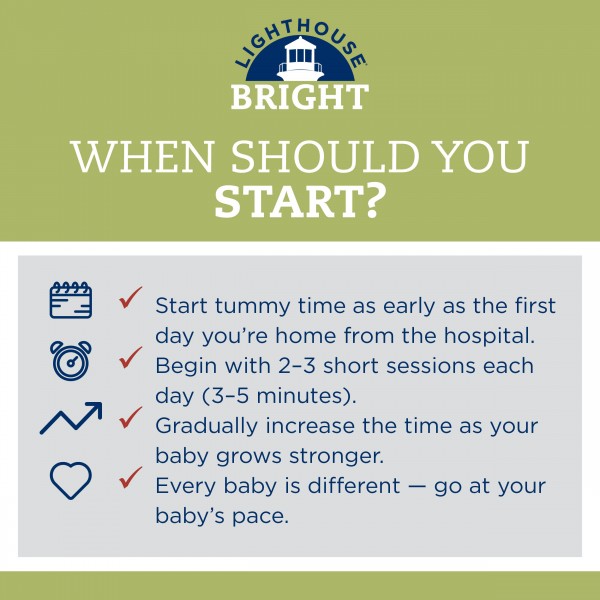
Parents can begin tummy time shortly after bringing their baby home from the hospital. The National Institute of Child Health and Human Development (NICHD) states that babies can begin tummy time as early as the first day home from the hospital.
Many pediatricians recommend starting with short sessions two to three times per day and gradually increasing the amount of time as your baby grows stronger and more comfortable.
Every baby develops at their own pace, so it is completely normal if your child needs time to adjust.
Why Is Tummy Time Important?
Tummy time supports several important areas of development during infancy.
While lying on their stomach, babies naturally practice lifting and turning their heads. This helps strengthen neck, shoulder, and upper body muscles that are essential for future movement.
Research has found that babies who participate in regular tummy time may show stronger motor development skills during infancy.
The NICHD Safe to Sleep Program notes that tummy time helps reduce pressure on the back of a baby’s head, which may help prevent flat spots from developing.
During tummy time, babies experience the world from a new perspective. They begin tracking movement, reaching for toys, and exploring their environment in new ways.
How Much Tummy Time Does a Baby Need?
In the beginning, even a few minutes at a time can be beneficial. As babies grow, parents can slowly work toward a total of about 20 to 30 minutes of tummy time spread throughout the day.
Some babies enjoy tummy time immediately, while others may fuss or become frustrated at first. Consistency and patience are key.
Tips to Make Tummy Time Easier
If your baby does not enjoy tummy time right away, there are several ways to help make the experience more positive.
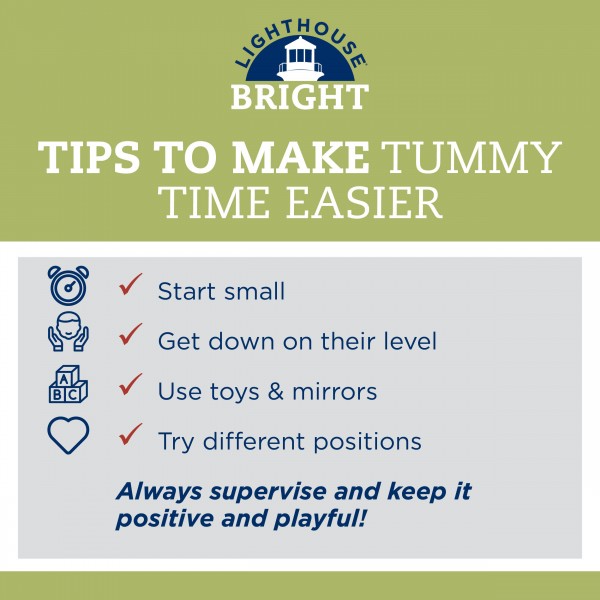
Start SmallShort sessions are completely okay in the beginning. Even one or two minutes at a time can help build strength.
Get Down on Their LevelBabies love seeing familiar faces. Lying on the floor with your baby can provide comfort and encouragement.
Use Toys and MirrorsSoft toys, rattles, or baby-safe mirrors can help keep your child engaged and interested during tummy time.
Try Different PositionsTummy time does not always have to happen on the floor. Parents can place babies on their chest or across their lap while supervised.
How Children’s Lighthouse Supports Physical Development in Our Bright Classrooms
At Children’s Lighthouse, our Bright Classrooms are designed to support physical development through nurturing interactions, purposeful play, and age-appropriate learning experiences.
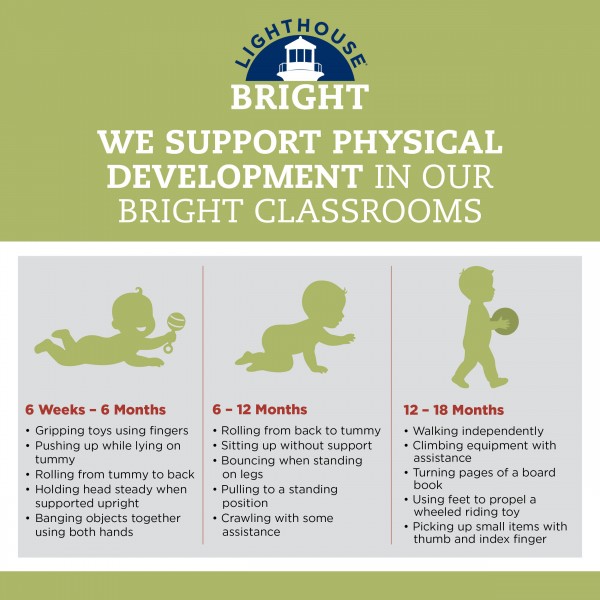
For infants ages 6 weeks to 6 months, teachers support milestones through supervised tummy time, sensory exploration, and guided floor play activities that encourage:
- Gripping toys using fingers
- Pushing up while lying on their tummy
- Rolling from tummy to back
- Holding their head steady when supported upright
- Banging objects together using both hands
As children continue growing in our 6–12 month classrooms, teachers encourage movement and exploration while children begin working on:
- Rolling from back to tummy
- Sitting up without support
- Bouncing when standing on legs
- Pulling to a standing position
- Crawling with some assistance
By 12–18 months, toddlers continue strengthening coordination and independence through activities that support:
- Walking independently
- Climbing equipment with assistance
- Turning pages of a board book
- Using feet to propel a wheeled riding toy
- Picking up small items with thumb and index finger
Our classrooms are intentionally designed to encourage movement, confidence, exploration, and whole-child development through engaging hands-on experiences.

Safety Tips for Tummy Time
Tummy time should always happen while babies are awake and supervised by an adult. Babies should continue sleeping on their backs during naps and nighttime sleep unless otherwise directed by a pediatrician.
The American Academy of Pediatrics continues to recommend placing babies on their backs to sleep to help reduce the risk of Sudden Infant Death Syndrome (SIDS).