



Teaching Preschoolers Fire Safety Through Stop, Drop and Roll
Fire safety is an important life skill that children can begin learning at an early age. While preschoolers are still developing their understanding of emergencies, introducing simple fire safety concepts can help them build confidence and learn how to respond appropriately if they ever encounter a dangerous situation.
One of the most recognizable fire safety lessons for young children is Stop, Drop and Roll. Through age-appropriate conversations, hands-on practice, and playful learning experiences, parents and educators can help preschoolers understand this important safety skill in a way that feels empowering rather than frightening.
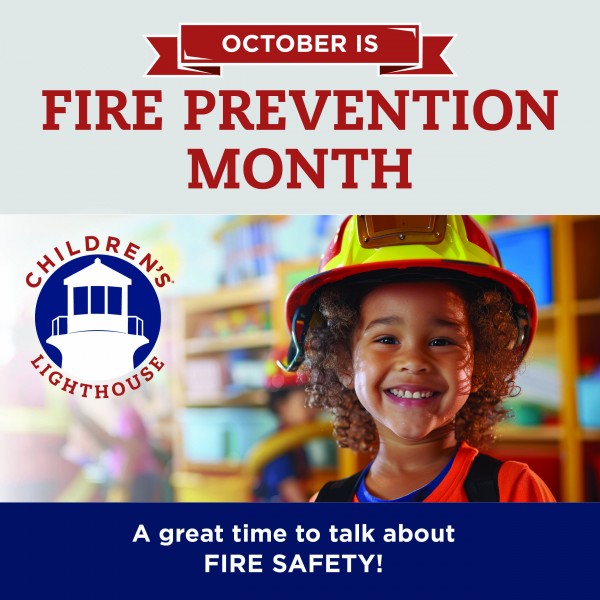
October is Fire Prevention Month, making it the perfect time for families and educators to talk about fire safety. Established by the National Fire Protection Association (NFPA), Fire Prevention Month encourages communities to learn about fire prevention, emergency preparedness, and safe habits that can help protect families. For preschoolers, simple lessons and hands-on practice can make these important safety messages easier to understand and remember.
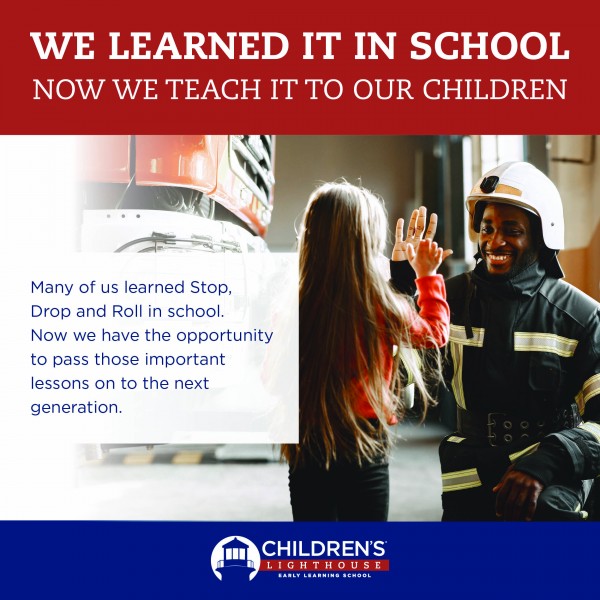
Many parents can still remember learning Stop, Drop and Roll when they were in school. Whether it was a visit from local firefighters, a classroom safety lesson, or practicing during Fire Prevention Month activities, the message was simple enough to stay with us for years. As parents, we now have the opportunity to pass those same lessons on to our own children. The key is teaching fire safety in ways that are appropriate for a preschooler's age and understanding. Through play, repetition, books, songs, and guided practice, children can begin learning important safety skills while feeling confident and secure.
What Does Stop, Drop and Roll Mean?
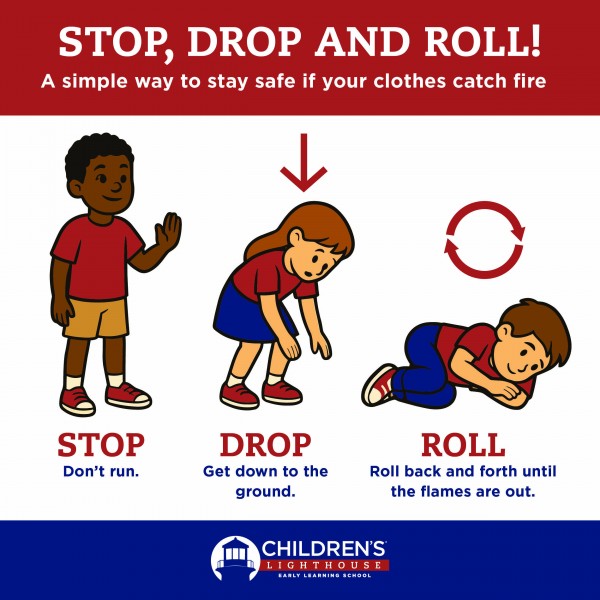
Stop, Drop and Roll is a simple technique used if clothing ever catches fire.
Children can learn the three basic steps:
- Stop – Do not run.
- Drop – Get down to the ground.
- Roll – Roll back and forth until the flames are out.
While the likelihood of a preschooler ever needing to use this skill is extremely low, learning the steps helps children become familiar with basic fire safety concepts and emergency preparedness.
Why Preschool Is a Good Time to Introduce Fire Safety
Preschool-aged children are naturally curious about the world around them. They are beginning to understand rules, routines, and safety expectations, making it an ideal time to introduce simple emergency concepts.
At this age, children learn best through:
- Repetition
- Songs and movement
- Pretend play
- Visual demonstrations
- Hands-on activities
Keeping lessons simple and positive helps children remember important information without creating fear or anxiety.
Fun Ways to Practice Stop, Drop and Roll
Children are more likely to remember safety lessons when they are paired with active learning experiences.
Turn It Into a Movement GameInvite children to practice the motions while saying the words aloud:
"Stop!"
"Drop!"
"Roll!"
Repeating the sequence several times helps build familiarity and confidence.
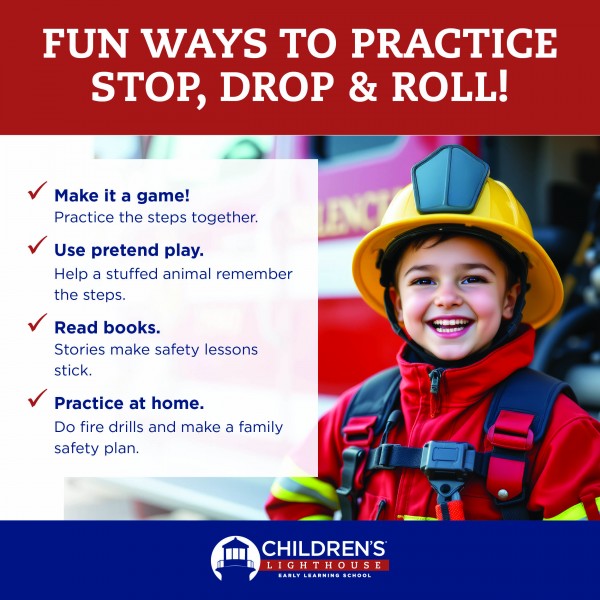
Use Pretend PlayPreschoolers love dramatic play. Practice different safety scenarios using stuffed animals or dolls.
For example:
- What should the teddy bear do if his shirt catches fire?
- How can we help our doll remember Stop, Drop and Roll?
Pretend play allows children to rehearse important skills in a safe and engaging way.
Read Fire Safety Books TogetherBooks can introduce safety concepts in a calm and age-appropriate manner. Reading stories about firefighters, fire stations, and emergency helpers can help children become more comfortable discussing safety topics.
Practice Fire Drills at HomeAlong with Stop, Drop and Roll, families can practice what to do if a smoke alarm sounds.
Simple lessons may include:
- Listening for the alarm
- Walking quickly to an exit
- Meeting at a designated safe spot outside
- Staying with a trusted adult
Regular practice helps children understand what to expect during an emergency.
Other Fire Safety Lessons Preschoolers Can Learn
As children grow, parents can introduce additional fire safety concepts, including:
- Smoke alarms help keep families safe.
- Matches and lighters are for adults only.
- Hot stoves, ovens, and grills should not be touched.
- Firefighters are helpers.
- Knowing their first and last name.
- Learning a parent's phone number and home address when developmentally appropriate.
These simple lessons help create a foundation for lifelong safety awareness.
How Children's Lighthouse Supports Safety Learning
At Children's Lighthouse, we believe children learn best through meaningful experiences, hands-on activities, and age-appropriate instruction. Safety concepts are introduced in ways that help children feel confident, secure, and prepared.
Through our proprietary curriculum, children engage in activities that support listening skills, following directions, problem-solving, and understanding routines—all important skills that contribute to emergency preparedness and personal safety.
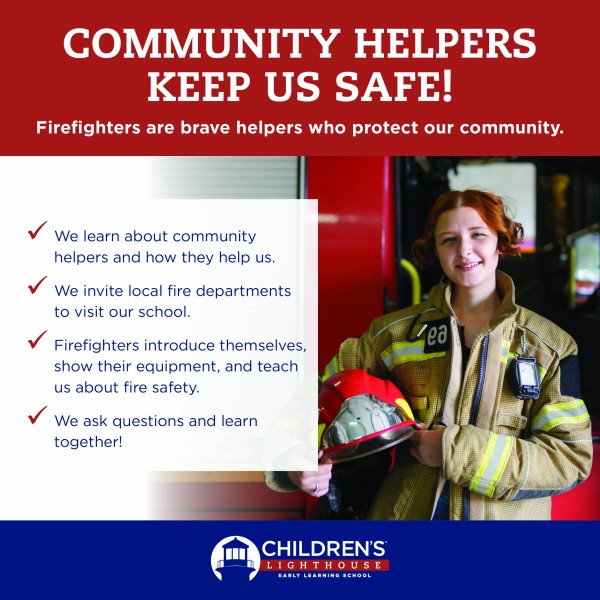
We also teach children about community helpers, helping them understand the important roles that firefighters, police officers, healthcare professionals, and other first responders play in keeping our communities safe. Learning about these helpers helps children develop trust and confidence in the adults they may encounter during an emergency.
As part of these lessons, many Children's Lighthouse schools invite local fire departments to visit the school and meet with children. These visits give firefighters an opportunity to introduce themselves, explain their equipment, discuss fire safety, and answer children's questions. Seeing firefighters in their gear and learning about their role firsthand can help reduce fear while reinforcing that firefighters are trusted community helpers.
By combining classroom learning, storytelling, role-playing activities, community helper lessons, and real-world experiences, we help children build an understanding of safety concepts in a positive and engaging way. These experiences reinforce important lessons like Stop, Drop and Roll while helping children develop confidence, awareness, and respect for the people who work to keep families safe.
Building Confidence Through Safety Education
Teaching preschoolers about fire safety does not have to be overwhelming. Simple lessons like Stop, Drop and Roll provide children with practical knowledge while helping them feel more prepared and confident.
When parents and educators work together to introduce safety concepts through play, repetition, and positive reinforcement, children develop important habits that can stay with them for years to come.
As Fire Prevention Month reminds us each October, the safety lessons we learned as children are still valuable today. By sharing them with the next generation in age-appropriate ways, we can help children build awareness, confidence, and a strong foundation for staying safe.
At Children's Lighthouse, we are committed to helping children grow academically, socially, emotionally, and safely—providing a strong foundation for lifelong learning and confidence.
Sources
National Fire Protection Association (NFPA). Fire Prevention Month and Fire Safety Education Resources.
American Academy of Pediatrics (AAP). HealthyChildren.org. Fire Safety Tips for Families.
U.S. Fire Administration. Fire Safety for Preschool and School-Age Children.
National Association for the Education of Young Children (NAEYC). Teaching Safety Skills Through Play and Everyday Learning Experiences.
Centers for Disease Control and Prevention (CDC). Home and Fire Safety Guidance for Families.