



Fun Cutting Activities for Preschoolers That Strengthen Scissor Skills
Fun Cutting Activities for Preschoolers That Strengthen Scissor Skills
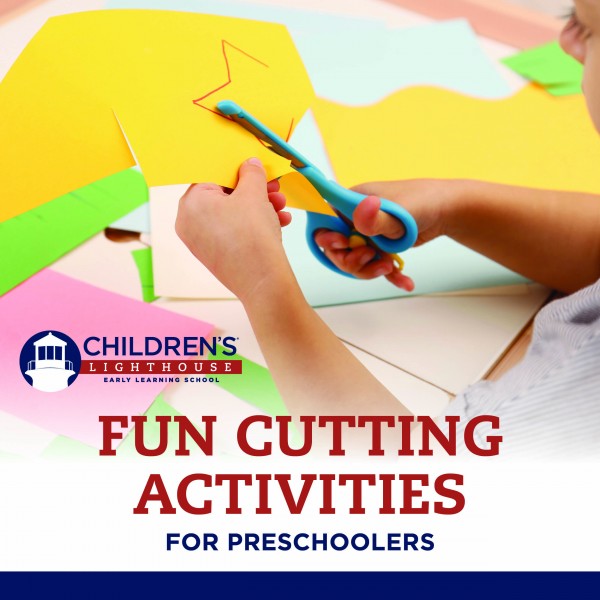
Learning to use scissors is an exciting milestone for preschoolers. Cutting activities help children build fine motor strength, hand-eye coordination, focus, and the confidence needed for future writing and classroom skills. While it may seem simple, learning proper scissor control takes practice, patience, and plenty of hands-on fun.
At Children’s Lighthouse, we know that preschool learning happens best through engaging experiences that encourage creativity and skill development at the same time. Simple cutting activities can support children as they strengthen the small muscles in their hands while exploring art, shapes, textures, and imagination.
Fun Cutting Activities for Preschoolers That Strengthen Scissor Skills
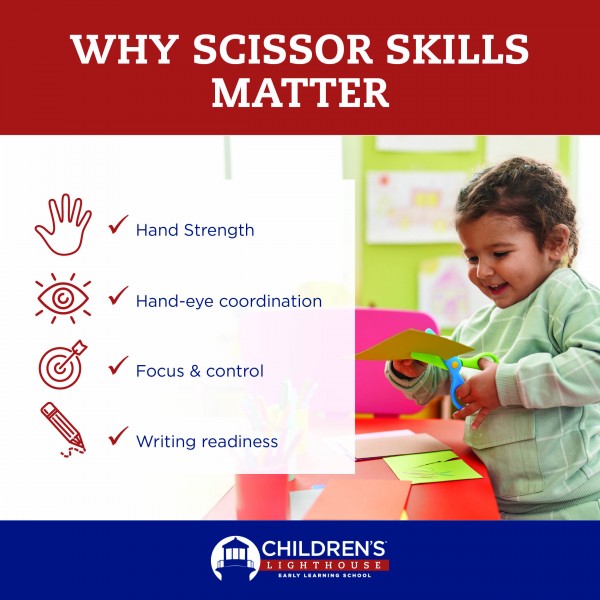
Learning to use scissors is an exciting milestone for preschoolers. Cutting activities help children build fine motor strength, hand-eye coordination, focus, and the confidence needed for future writing and classroom skills. While it may seem simple, learning proper scissor control takes practice, patience, and plenty of hands-on fun.
At Children’s Lighthouse, we know that preschool learning happens best through engaging experiences that encourage creativity and skill development at the same time. Simple cutting activities can support children as they strengthen the small muscles in their hands while exploring art, shapes, textures, and imagination.
Start with Simple Cutting Practice
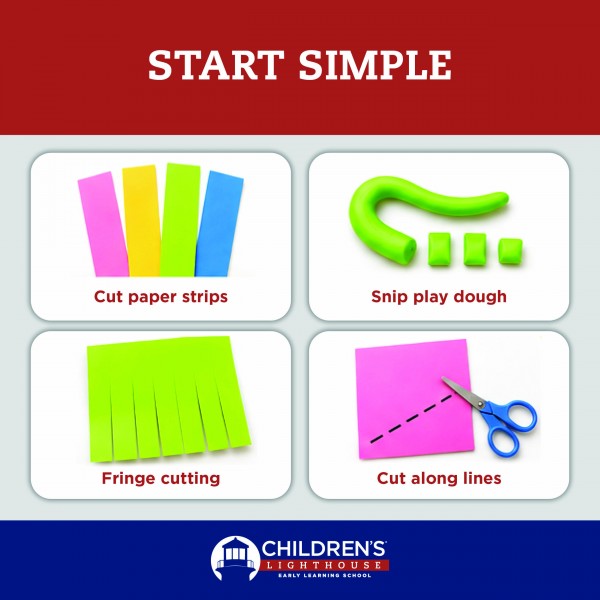
Before children begin cutting detailed shapes, it helps to start with simple, beginner-friendly activities that allow them to practice opening and closing scissors safely.
Easy starter activities include:
- Cutting strips of paper
- Snipping play dough snakes
- Cutting drinking straws into pieces
- Cutting fringe along paper edges
- Trimming around index cards
- Cutting tissue paper for collages
These activities help preschoolers learn how scissors feel in their hands while building control and coordination.
Creative Cutting Activities Preschoolers Love
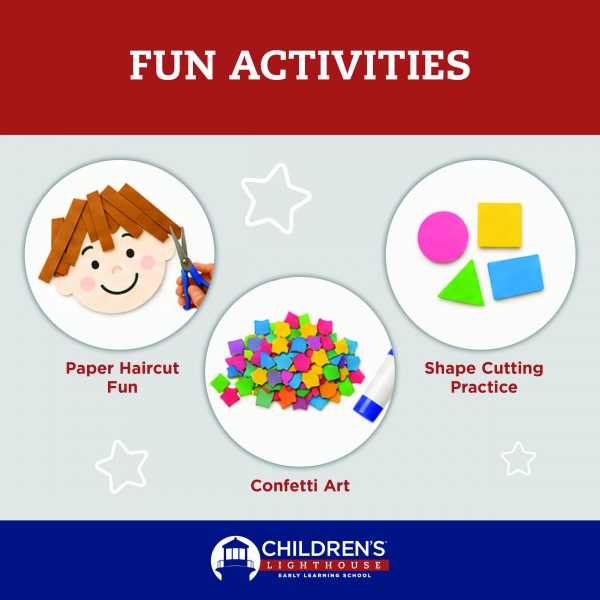
Once children become more comfortable using scissors, you can introduce fun themed activities that keep them engaged while strengthening their skills.
Build a Paper Haircut SalonDraw faces on paper plates or construction paper and let children “cut” different hairstyles using strips of paper. Preschoolers love pretending to be hairstylists while practicing controlled cutting.
Nature Cutting CollagesChildren can cut pictures of flowers, trees, animals, or leaves from magazines and create their own nature-inspired collage artwork.
Cutting Play Dough CreationsRolling play dough into long snakes or flattened shapes gives children a softer material to cut. This can feel easier and less intimidating than paper for beginners.
Shape Hunt CutoutsDraw simple shapes like circles, squares, and triangles for children to cut out and sort into groups afterward.
Craft Stick and Paper PuppetsChildren can cut out simple puppet shapes, decorate them, and attach them to craft sticks for imaginative play.
Confetti Cutting FunGive children colorful paper scraps and let them create their own confetti pieces. They can then glue the pieces into artwork or sensory projects.
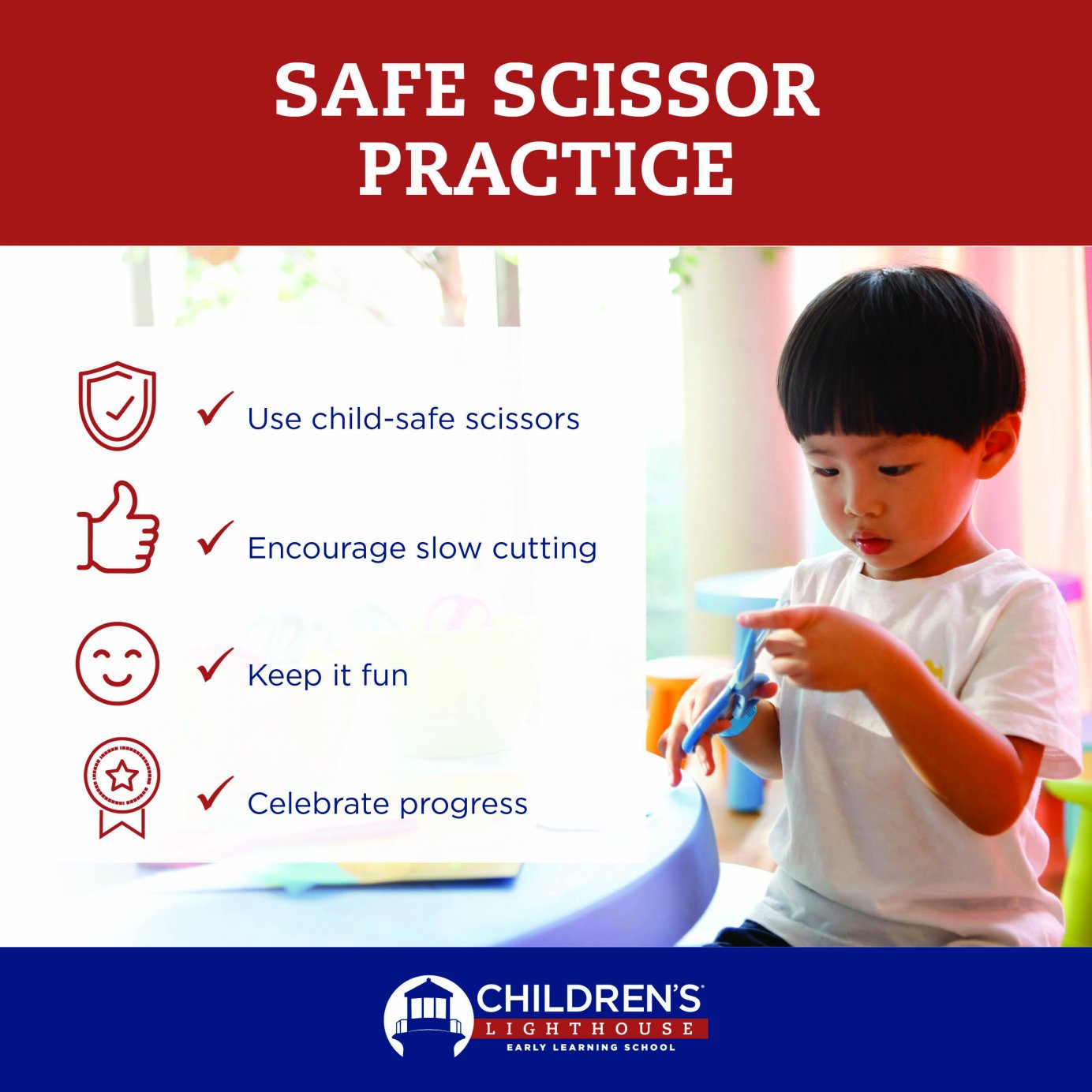
Tips for Teaching Safe Scissor Skills
Scissor practice should always be supervised, especially for younger preschoolers. A few simple strategies can help children feel successful and safe.
Helpful tips include:
- Use child-safe scissors designed for preschool hands
- Show children how to hold scissors correctly with thumbs up
- Encourage slow, controlled movements
- Provide thicker paper for beginners
- Keep activities short and fun
- Celebrate effort instead of perfection
Children develop scissor skills at different rates, and it is completely normal for some preschoolers to need more practice than others.

Supporting Fine Motor Development in the Classroom
At Children’s Lighthouse, our educational programs support fine motor development through hands-on learning experiences designed for every stage of early childhood. In our classrooms, children participate in age-appropriate activities that encourage creativity, independence, and important school-readiness skills.
From art projects and sensory exploration to early writing practice and guided activities, children are constantly strengthening the coordination and confidence needed for future success.
Keep Learning Fun
The best cutting activities are the ones that feel playful and pressure-free. Preschoolers learn best when they are encouraged to explore, create, and practice through fun experiences that build confidence over time.
Whether your child is snipping paper for the first time or proudly cutting out shapes on their own, every little practice moment helps strengthen skills that support lifelong learning.
Sources
American Academy of Pediatrics. HealthyChildren.org. Developmental Milestones and Fine Motor Development Resources. American Academy of Pediatrics.
National Association for the Education of Young Children (NAEYC). Developmentally Appropriate Practice in Early Childhood Programs Serving Children from Birth Through Age 8. Washington, DC: NAEYC.
Centers for Disease Control and Prevention (CDC). Learn the Signs. Act Early. Developmental Milestones. U.S. Department of Health and Human Services.
Zero to Three. Fine Motor Development: Building Skills Through Everyday Play. Zero to Three National Center for Infants, Toddlers, and Families.
PBS Parents. Activities That Strengthen Fine Motor Skills in Preschoolers. PBS.
Scholastic Parents. Developing Fine Motor Skills Through Art and Cutting Activities. Scholastic Inc.
The Learning Center at the University of Illinois Extension. Developing Scissor Skills in Early Childhood. University of Illinois Extension.
Children's Lighthouse. BRIGHT™ Curriculum: Supporting Fine Motor Development Through Hands-On Learning Experiences. Children's Lighthouse Franchise Company.