



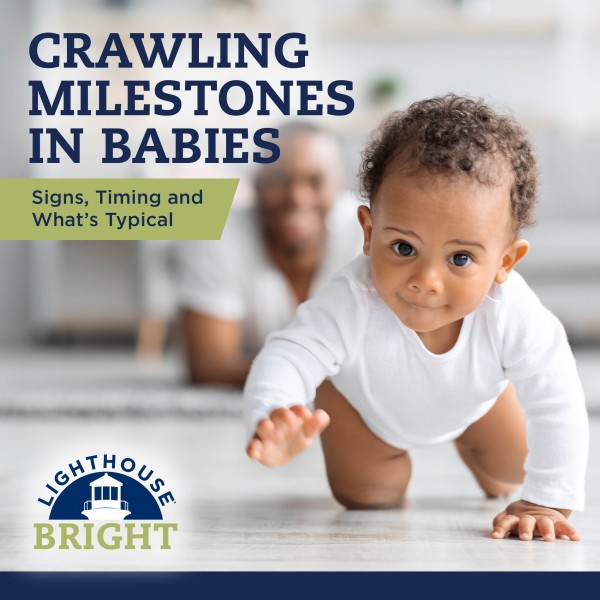
Crawling Milestones in Babies: Signs, Timing and What’s Typical
One of the most exciting milestones during a baby’s first year is crawling. Crawling helps babies build strength, coordination, confidence, and independence as they begin exploring the world around them.
Most babies begin crawling between 6 and 10 months old, but every child develops at their own pace. Some babies crawl early, some later, and some may skip traditional crawling altogether.
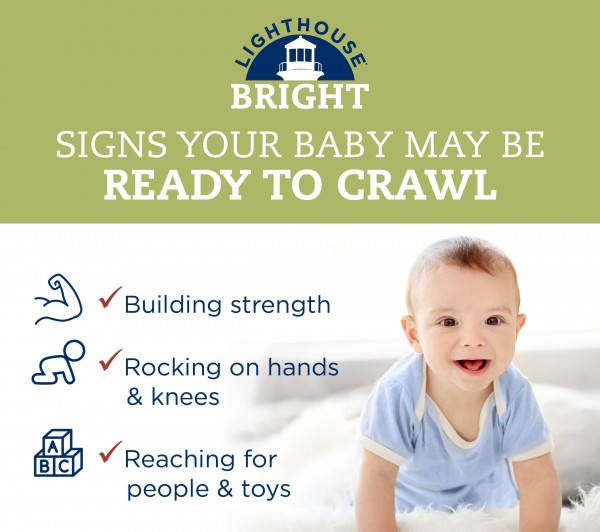
Before crawling begins, babies often show signs they are building the strength and coordination needed for movement. These milestones may include:
- Pushing up during tummy time
- Rolling over
- Sitting independently
- Rocking on hands and knees
- Scooting or pivoting on their tummy
As babies prepare to crawl, parents may notice increased curiosity and motivation to move toward toys, caregivers, or objects around them.
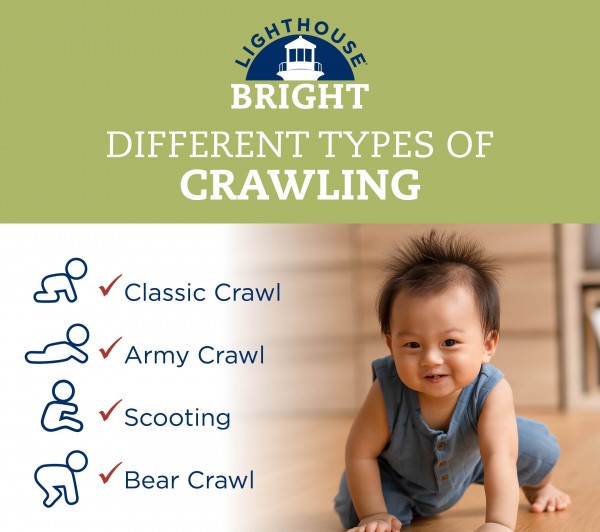
Not all babies crawl the same way, and many develop their own unique way of moving before walking. Some babies begin with small scooting movements, while others quickly move into a traditional crawl. It is completely normal for crawling styles to vary from child to child.
Common crawling styles include:
- Classic crawl — moving on hands and knees with alternating arm and leg movements
- Army crawl — pulling forward on the tummy using the arms
- Scooting — moving while seated using arms and one leg
- Bear crawl — crawling on hands and feet with knees lifted off the ground
- Crab crawl — moving sideways or even backward before learning forward movement
Some babies may even combine multiple crawling styles as they learn and grow. These movements help strengthen muscles, improve balance and coordination, and support overall physical development as babies prepare for standing and walking.
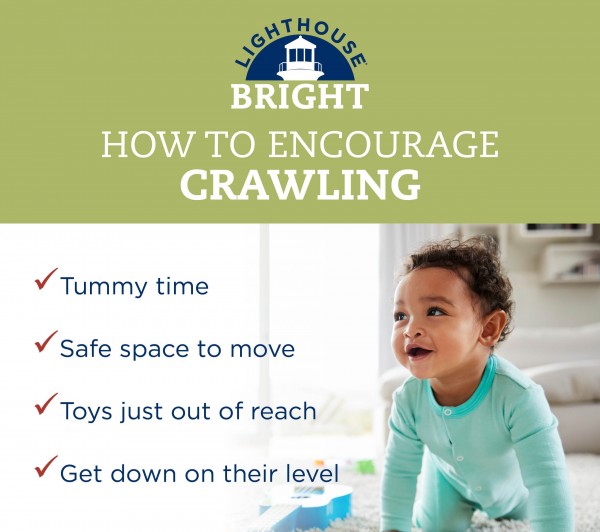
Parents can help encourage crawling by creating opportunities for safe movement and floor play throughout the day. Helpful ways to support crawling development include:
- Prioritizing tummy time
- Creating open floor space for movement
- Using toys as motivation
- Encouraging more floor play
- Getting down on the floor to play and interact
While swings, bouncers, and activity seats can be helpful for short periods of time, babies also need supervised floor play to practice rolling, scooting, and crawling movements.

At Children's Lighthouse, our proprietary BRIGHT infant curriculum supports physical development through intentional play, tummy time, movement activities, and hands-on exploration.
In our BRIGHT classrooms, infants are encouraged to:
- Build arm, shoulder, back, and core strength
- Practice coordination and balance
- Explore age-appropriate toys and materials
- Strengthen fine and gross motor skills
- Gain confidence through movement and discovery
Our nurturing classroom environments help support each child’s unique developmental journey while encouraging important milestones at their own pace.
American Academy of Pediatrics. “Movement: Babies 8 to 12 Months.” HealthyChildren.org. American Academy of Pediatrics. Accessed May 2026.
Centers for Disease Control and Prevention. “Important Milestones: Your Baby By 9 Months.” CDC Developmental Milestones. U.S. Department of Health & Human Services. Reviewed June 2023. Accessed May 2026.
Centers for Disease Control and Prevention. “Learn the Signs. Act Early.” CDC Developmental Milestones Program. U.S. Department of Health & Human Services. Accessed May 2026.
National Institutes of Health. “Motor Development in Infancy.” National Library of Medicine. U.S. National Institutes of Health. Accessed May 2026.
Zero to Three. “Motor Development: Birth to 18 Months.” Zero to Three Early Development Resources. Accessed May 2026.
American Academy of Pediatrics. “The Importance of Tummy Time.” HealthyChildren.org. American Academy of Pediatrics. Accessed May 2026.
Mayo Clinic Staff. “Infant Development: Milestones from 7 to 9 Months.” Mayo Clinic. Accessed May 2026.
Pathways.org. “Crawling Styles and Motor Milestones.” Pathways Early Development Resources. Accessed May 2026.